Nigerdock: 40 years of Nigeria’s Aborted Dream
Nigerdock: 40 years of Nigeria’s Aborted Dream
- Don Climax Media
- April 17, 2026
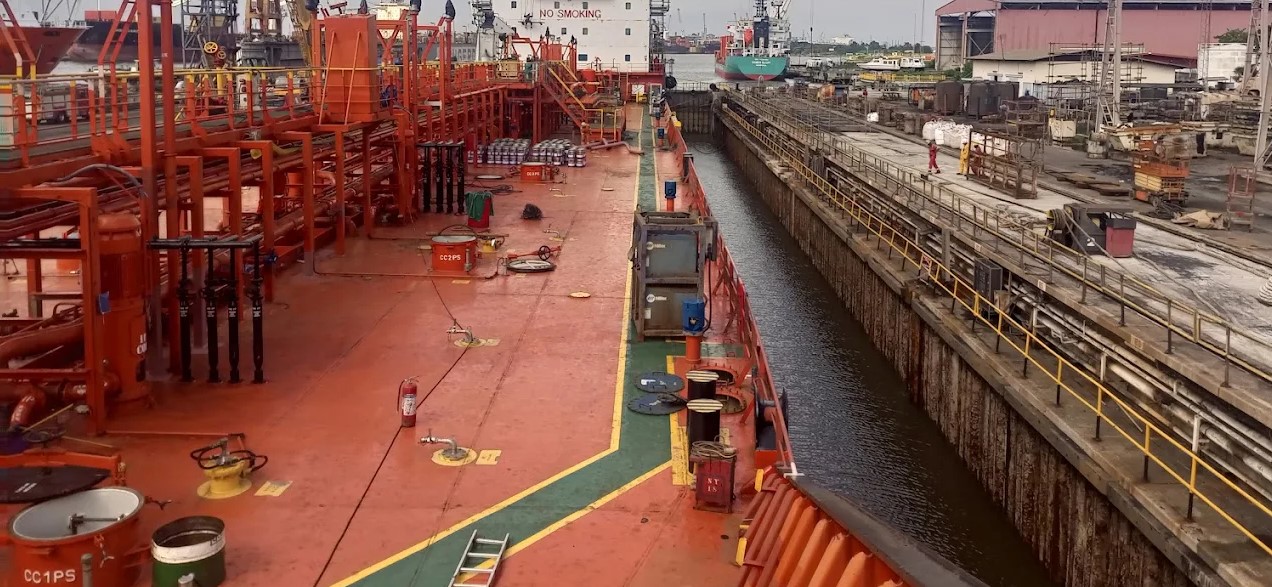
Recently, (April 24, 2026), Nigerdock celebrated its 40th anniversary. But the celebration was made known to the public a few days later via a press release by the company.
In the press release, Nigerdock said it was celebrating four decades of resilience, continuous reinvestment, and growth from ship repair and fabrication into a regional hub for port operations, logistics support, and free zone services.
Speaking at the anniversary, the company’s CEO, Maher Jarmakani said: “Our journey has been one of resilience, constant reinvestment, and an unwavering commitment to excellence. From our early days in ship repair and fabrication, to becoming a regional hub for port operations, logistics support, and free zone services, we have consistently adapted, scaled our operations, and delivered landmark projects to our customers. We have trained thousands in our workforce in specialized skills, and proven that local talent, supported by world-class systems, can deliver global standards. As we celebrate forty years of operational excellence, we acknowledge the decades of collaboration with our clients, employees, and partners, and remain fully focused on driving Nigeria’s economic growth.”
Ordinarily, this speech deserves commendation were things to be what they were supposed to be. Unfortunately, on the contrary, for maritime stakeholders and journalists who witnessed the establishment of Nigerdock in 1986, and followed its growth and progress before its privatization in 2003, the speech evokes a feeling of revulsion, a feeling of regret and pity for the Nigerian nation.
While Jarmakani and the owners of Nigerdock celebrate their successes and triumph, Nigeria should be marking 40 years of aborted dream, 40 years of destruction of a valuable national asset. The Nigerian shipping and maritime industry should be ruing a wasted opportunity to boast of a thriving, world-class dockyard.
For the avoidance of doubt, Nigerdock was established as a ship fabrication and repair yard. But today, it is being celebrated as having a “legacy of driving industrialization across Nigeria’s economic sectors, and delivering critical port infrastructure, terminal operations, ship repair, real estate, and free zone solutions.”
It is saddening that Nigerdock, an ambitious ship building and repair dockyard established by the federal government, is today being referred to as a port terminal, real estate and free zone solutions operator. Forty years after its establishment as a ship building and repair yard, it is being celebrated as a leading logistics and free trade zone operator.
The history of Nigerdock and the abortion of a dream
Nigerdock was established in 1986 as an ambitious federal government project in Snake Island, Lagos. It was set up with World Bank funding with the objective to reduce capital flight on ship maintenance.
The initial goal and focus of the company was dry docking, repairing, and building of small-to-medium-sized vessels (up to 8,000 DWT).
Powered by an accomplished Nigerian Engr, Dr. Nnamdi Ozobia, and backed by Navimor, a world renowned ship builder and project developer, Nigerdock recorded unprecedented success. Until the late 1990s, Nigerdock was considered a successful government company, having serviced over 600 vessels by 2000 and fabricating world-class boats.
In 2003, in a hazy and opaque circumstances, the fledging company was handed over to Jagal Group, following allegations of corruption and mismanagement. Before then, in 2000, the government, under President Olusegun Obasanjo, had initiated probes into alleged corruption and mismanagement, specifically targeting its managing director, Dr. Ozobia. But Ozobia was later cleared years after his removal, as the allegations turned out to be malicious and mere demonstration of raw power. All these to the loss of the nation.
The privatization of Nigerdock was also explained as part of the privatization policy of government aimed at attracting private investment and efficiency. Hence the hand over the company to Jagal Group.
The abortion of the dream
With the hand-over to Jagal, Nigerians, especially maritime observers, expected dockyard activities to receive a boost. Instead, the privatization of the company and its acquisition by Jagal marked the end of Nigeria’s dream of a ship repair and fabrication yard.
The privatization caused a shift from general shipbuilding and repairs to a focus on offshore oil and gas construction, thereby killing the original vision. Under the new management, the company pivoted to becoming a Logistics and Free Zone company, widening its scope beyond just shipping. It veered into questionable port terminal activities, real estate and free zone operations.
Thus, a company that was established solely to undertake all aspects of dry docking lost its focus while the government looked on or tacitly endorsed the derailment of a lofty dream.
Today, Nigeria still lacks a functional, large-scale indigenous shipbuilding and repair industry, despite high potential. The country continues to lose billions of Naira to capital flight by taking ships to foreign countries for maintenance.
A painful reminder:
To all intents and purposes, the celebration of 40 years of Nigerdock is a sad and painful reminder of what Nigerdock was, and would have been. The 40th anniversary ought to have been an occasion for deep national pride—a celebration of Nigeria’s foresight in establishing what was once envisioned as a world-class shipbuilding and repair yard, capable of placing the country firmly on the global maritime industrial map.
Instead, for many maritime observers, stakeholders and patriotic Nigerians, the celebration only evokes a painful memory of a national dream interrupted, diverted and betrayed.
This is more so as one remembers that Nigerdock was originally established by the Nigerian government as a strategic shipbuilding and ship repair facility, not merely another commercial waterfront asset. When one remembers that the Snake Island facility was a symbol of industrial ambition— a practical investment in maritime engineering, indigenous technical expertise and national self-reliance.
And that under the stewardship of accomplished Nigerian engineer, Nnamdi Ozobia, the facility flourished. It was not only engaged in repairs but was steadily building capacity, with promising signs that Nigeria could eventually develop internationally competitive vessel construction capability.
At its core, Nigerdock represented something larger than business. It was about national capacity. It was about creating a future where Nigeria, with its vast coastline, enormous offshore resources and strategic maritime position, could build, maintain and service its own vessels while becoming a regional hub for marine engineering.
This ambition subsisted until privatization came, and Nigerdock was concessioned to Jagal. As a matter of fact, many Nigerians did not oppose the move outright, because there was hope and optimism that private capital and management would strengthen the original vision, modernize the yard and accelerate its growth into a globally competitive shipbuilding and repair complex.
But what followed stunned many maritime operators and observers. Rather than preserving and expanding the shipyard’s foundational purpose, the facility gradually began receiving cargo and shifting toward port-related commercial activities. This dramatic deviation from its original mandate quickly attracted national outrage.
The attention of the National Assembly was drawn, which openly condemned the development, describing the conversion of the strategic ship repair yard into cargo-handling operations as illegal and contrary to the facility’s core purpose. They showed concern by promptly visiting the Snake Island, the home of Nigerdock at least two times.
At the time, it appeared the nation’s political leadership understood the gravity of what was at stake: the potential loss of a strategic industrial asset built to serve long-term national development.
Unfortunately, after the noise, the outrage and intervention, the resistance gradually faded. Negotiations took place, there was “settlement”, tensions eased, and the issue died quietly. The senators on subsequent visits began to commend “the high-level facilities at Nigerdock”, pledging to offer legislative backing to enhance port operations and maximize investments.
Thus, Jagal ultimately continued the transformation of Nigerdock away from its shipbuilding and repair destiny into port operations, logistics support and free zone services.